
RERA Verification in Delhi NCR — How to Check a Project on UP-RERA, HARERA & Delhi RERA (Step-by-Step, 2026)
A no-fluff 2026 walkthrough to verify any Delhi NCR project on UP-RERA, HARERA and Delhi RERA — registration numbers, QPRs, complaints, escrow, and the 2026 amendment.
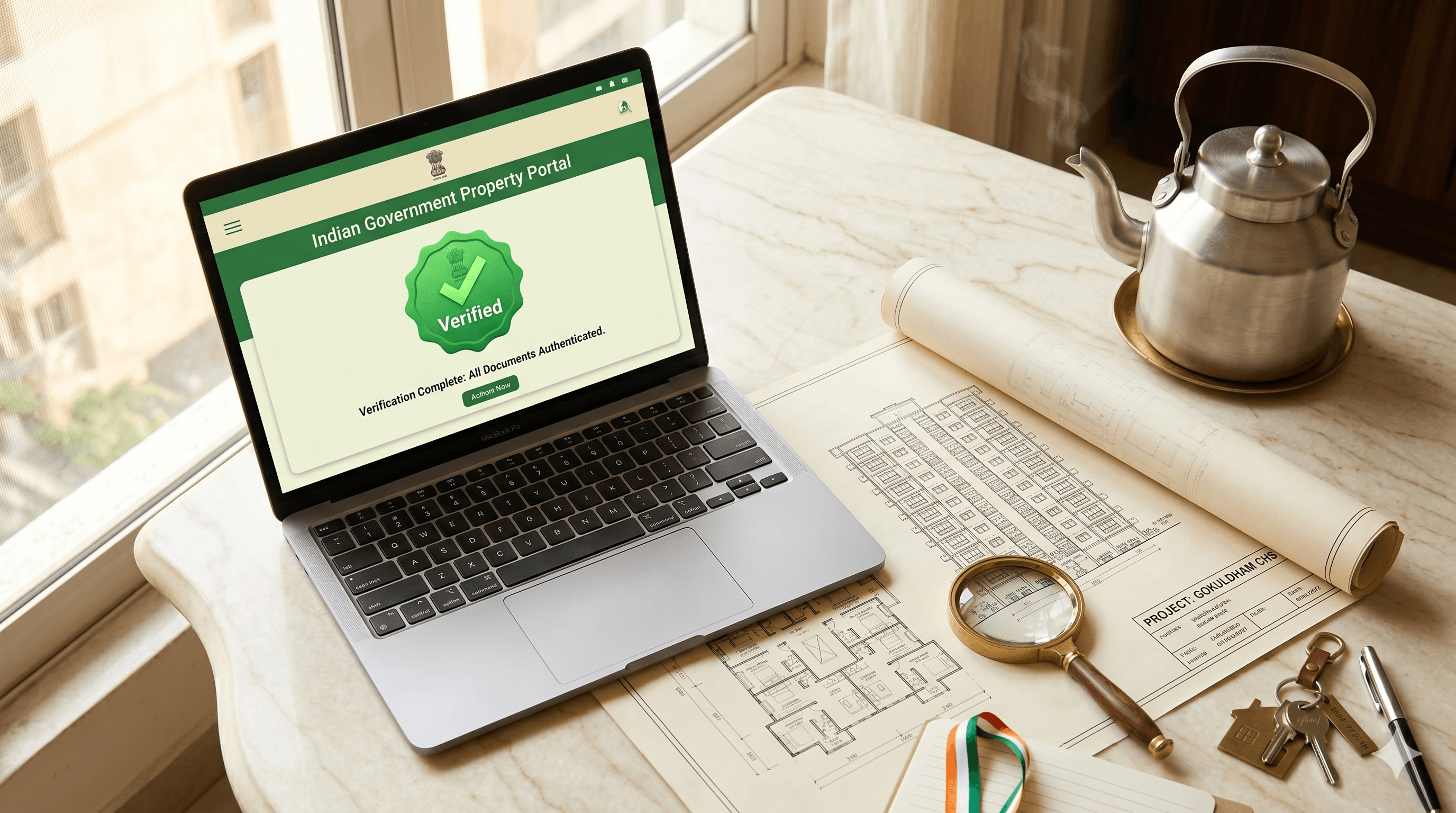
"RERA-approved" is probably the most over-used phrase at NCR site visits, and almost nobody who says it has actually opened the portal. A green tick on a brochure means very little if the registration has lapsed, the QPRs are stale, or there are 84 pending complaints sitting against the promoter. Twenty minutes of clicking around the right RERA website will tell you more about a project than an hour with any sales manager.
This is the exact verification flow we run before we let a client sign a cheque — on any project, in any NCR sub-market, without exception.
What RERA registration actually is (and what it isn't)
Under the Real Estate (Regulation and Development) Act 2016, every promoter in Uttar Pradesh, Haryana and Delhi must register a project with the relevant state authority if it is larger than 500 sqm of land or has more than 8 units. The registration number is the canonical identifier — not the brochure, not the hoarding, not the broker's WhatsApp forward.
What you get when a project is RERA-registered:
- A traceable promoter/company name on record
- Sanctioned layout and floor plans uploaded by the builder
- A declared possession date that is legally binding
- Quarterly Progress Reports (QPRs) showing construction and sales progress
- A 70% escrow requirement — 70% of funds collected from buyers must sit in a dedicated project account
- A ±3% cap on carpet-area variance at handover; exceed that and the buyer is entitled to a refund with interest
What RERA does not guarantee:
- On-time possession (only delay compensation, at SBI MCLR + 2%)
- A specific brand of fittings or a marble variant
- That the clubhouse, pool or banquet in the brochure will exist
- That a "subvention scheme" builder won't default on its interest payments
- Any guarantee against resale-price fall
Keep that list honest in your head before you go portal-diving.
UP-RERA — Noida, Greater Noida, Ghaziabad, YEIDA belt
The UP-RERA portal is up-rera.in. For verification, use the public search at up-rera.in/verify.
Step-by-step
- Open the verify page and pick Project Search (you can also search by promoter name or registration number).
- Enter the project name exactly as marketed (partial matches work).
- On the project page, confirm these fields match the brochure and the actual promoter entity:
- Registration number and validity (is it still live, or expired and un-renewed?)
- Promoter / company name — the sale deed must be signed by this exact entity
- Approved layout plans and tower plans
- Declared completion date (this is the one that triggers delay compensation)
- Open the QPR tab. Look at the latest quarter — if the last QPR is a year old, that is a red flag by itself.
- Open the Litigations tab and the Complaints tab. Count the pending complaints. Anything in double digits on a mid-sized project deserves a hard conversation.
- Ask the builder in writing for the escrow bank name and account, and verify that 70% of collections are actually routed there.
If the registration is "expired" or "lapsed", walk. If it is under "extension" with a new possession date, recalibrate your expectations accordingly.
HARERA — Gurugram, Faridabad, Sohna, Panchkula
Haryana RERA is at haryanarera.gov.in and runs two benches — Gurugram (covers Gurugram, Faridabad, Sohna, Dwarka Expressway) and Panchkula (covers Panchkula, Karnal, the northern districts).
Flow is almost identical to UP-RERA:
- Go to Registered Projects on the portal.
- Filter by city/sector, or search by project name.
- On each project card, click through to the full profile — registration number, promoter PAN, approved plans, QPRs, litigation history.
- For Gurugram buyers especially, check the complaints register on the Gurugram bench separately. Several well-known Dwarka Expressway and Sohna launches carry 40-100+ pending cases.
HARERA has been more aggressive than most authorities at penalising delay. That is useful when you are a buyer; it also means a project with a heavy litigation trail is often one where buyers have actually recovered money — which is a different signal from outright avoidance.
Delhi RERA — inside NCT Delhi
Delhi RERA sits at rera.delhi.gov.in and covers both DDA-led projects and private launches inside NCT. Inventory is thinner than UP or Haryana, but for Dwarka, Rohini and select South Delhi redevelopment projects this is the portal you need.
The interface is less polished than UP-RERA, but the data fields are the same: registration number, promoter, approved plans, QPRs, and a complaints register. For DDA projects, the "promoter" field will read DDA; that does not exempt the project from delay-compensation rules.
The March 2026 amendment — complaints against unregistered projects
This is the change most buyers have missed. Historically, if a builder simply refused to register a project with RERA, the authority had no real teeth to act on a buyer's behalf — the complaint itself was dismissed on jurisdiction. The March 25, 2026 amendment closed that loophole: buyers can now file complaints against unregistered projects too, and the authority can initiate registration and penalty proceedings on the promoter's behalf.
In practice:
- If a plotted development or small builder-floor project is hiding behind the 500 sqm / 8-unit threshold to avoid registration — you can still file.
- If a phased project has registered Phase 1 but quietly pre-sold Phase 2 without registration — you can now file on Phase 2.
- If you have paid an advance and the builder has not produced a registration number within a reasonable timeline — you have a complaint.
How to file a RERA complaint (Delhi NCR)
The mechanics are straightforward and do not need a lawyer, though one helps if the quantum is material.
| Step | What to do |
|---|---|
| 1 | Download the complaint form from the relevant RERA portal (UP / Haryana / Delhi) |
| 2 | Pay the fee — UP-RERA is ₹1,000 per complaint; HARERA is ₹1,000; Delhi RERA is ₹1,000 |
| 3 | Attach the booking/allotment letter, builder-buyer agreement, and payment receipts |
| 4 | File a clear prayer — refund with interest, delay compensation, or specific performance |
| 5 | First hearing is typically within 60 days; orders usually within 6-9 months |
Interest on delays is awarded at SBI MCLR + 2% — as of April 2026, that's roughly 11.1-11.3% p.a., often better than what the money would have earned elsewhere.
Bottom line
- Always pull the RERA record yourself — don't trust a brochure sticker.
- Check registration validity, QPR freshness, complaints count, and escrow bank — in that order.
- RERA gives you recourse, not a guarantee; stack it with title search, CA review and legal vetting.
- The 2026 amendment means unregistered projects are no longer a dead end — you can still file.
- If any field in the portal doesn't match what the builder is telling you verbally, believe the portal.
If you want us to run a full RERA + title + legal pull on any NCR project you're evaluating, send us the project name and sector — we do this for every client before we let them write a cheque, whether they buy through us or not. See our current curated inventory on the properties page, read the companion flat-buying checklist for Delhi NCR and the Indirapuram 2026 investment view, or just drop us a note with the project details.